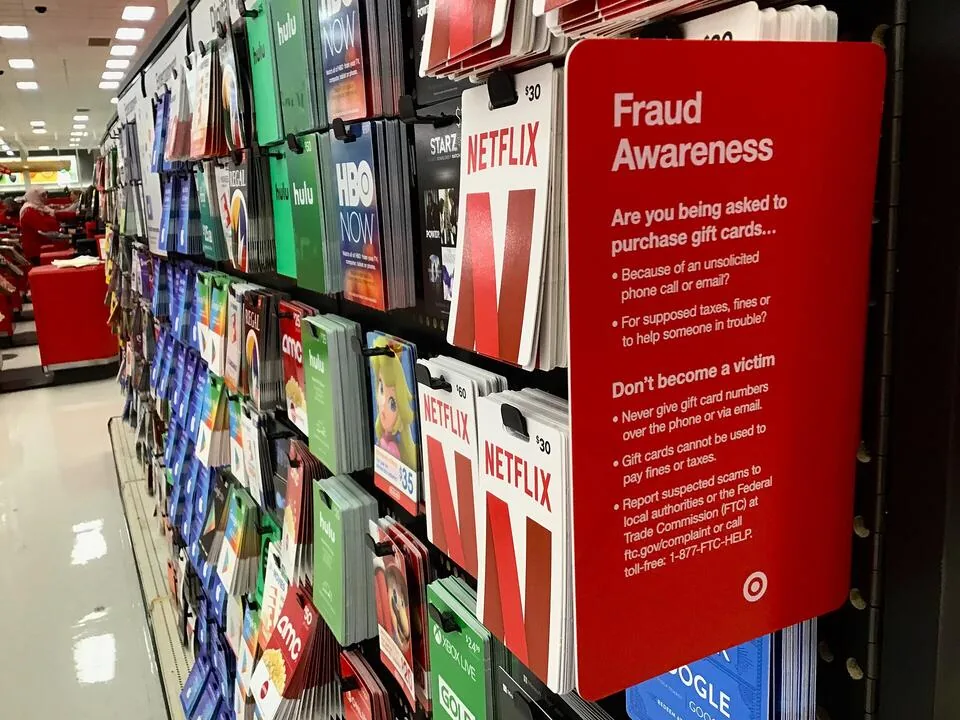
Gift cards are a holiday target because they are easy to tamper with
WASHINGTON, DC — Gift cards are a popular last-minute holiday purchase, and scammers know shoppers often grab them quickly from busy store racks. The Better Business Bureau says gift card draining is No. 3 on its holiday scam list, behind misleading social media ads and AI voice-cloning emergency calls.
The problem is simple but damaging: a card can be altered before a shopper buys it, then activated at the register with the money already exposed to the thief. The BBB says a fast inspection at checkout can help shoppers avoid buying a card that has been compromised.
How the scam works
The BBB describes two common versions of gift card draining. In one, scammers remove cards from store displays, copy the card number and PIN, and return the cards to the rack. In the other, they place a sticker over the real barcode and put the card back where a shopper may pick it up without noticing anything unusual.
When the buyer pays and the cashier activates the card, the value goes to the scammer instead of staying protected for the intended recipient. By the time the gift is opened, the balance may already be gone. The BBB says grocery stores and pharmacies are especially vulnerable because their card racks are easy to reach, busy, and packed with many popular brands.
The scheme is most common during November and December, when shoppers are rushing to buy gifts in person. That convenience is exactly what makes the rack attractive to scammers, especially near checkout lanes and self-checkout areas where purchases happen quickly.
The warning signs
- The package looks torn, wrinkled, opened, or resealed.
- A PIN area is exposed or appears to have been uncovered.
- The barcode feels raised or has a second label on top of it.
- The card seems to have a sticker covering the printed barcode.
- The rack card has been moved, damaged, or does not look factory sealed.
- A website offering to check the balance seems unofficial or unfamiliar.
If you've already paid or shared information
- Contact the gift card company right away and ask whether a refund or trace is possible.
- Keep the receipt and a copy of the card, since both can help the company investigate the activation details.
- If you used a credit card, contact your card issuer quickly and ask about dispute options.
- Change any passwords or account details if you entered card numbers or personal information on a suspicious website.
- Report the scam to the FTC at ReportFraud.ftc.gov.
- Also file a report with the Better Business Bureau’s Scam Tracker if you want the pattern recorded for other consumers.
How to protect yourself
- Buy gift cards from behind the counter or directly from the retailer’s official website when you can.
- Before paying, feel the barcode area for any sticker, bump, or edge that should not be there.
- Check the package for tears, wrinkles, or signs that it was opened and put back.
- Use a credit card when possible, since it may offer stronger dispute rights than cash or debit.
- Keep the receipt until the card is fully used, because it can help prove where and when the card was activated.
- Check balances only through the brand’s official website, app, or phone number printed on the card.
BBB also warns shoppers to be cautious about websites that claim they can check a gift card balance. Some of those pages exist only to collect card numbers, not to help the user. A legitimate balance check should come from the card brand itself.
The bottom line
Gift card draining works because it hides in plain sight and depends on shoppers moving quickly during the busiest buying season of the year. A few seconds of inspection at the rack can make the difference between a usable gift and an empty card.
If something looks off, put the card back and choose another one. The BBB and FTC both say the safest habit is to slow down, inspect the packaging, and verify balances only through official channels.